
Where to Keep Your Emergency Money — Liquid Asset Options
Savings accounts, fixed deposits, and investment funds all have tradeoffs. We break down the pros and cons of each option available to Malaysians.
Read ArticleCalculate the right reserve size for your household. Most families need three to six months of living expenses — here’s why and how to figure your exact number.
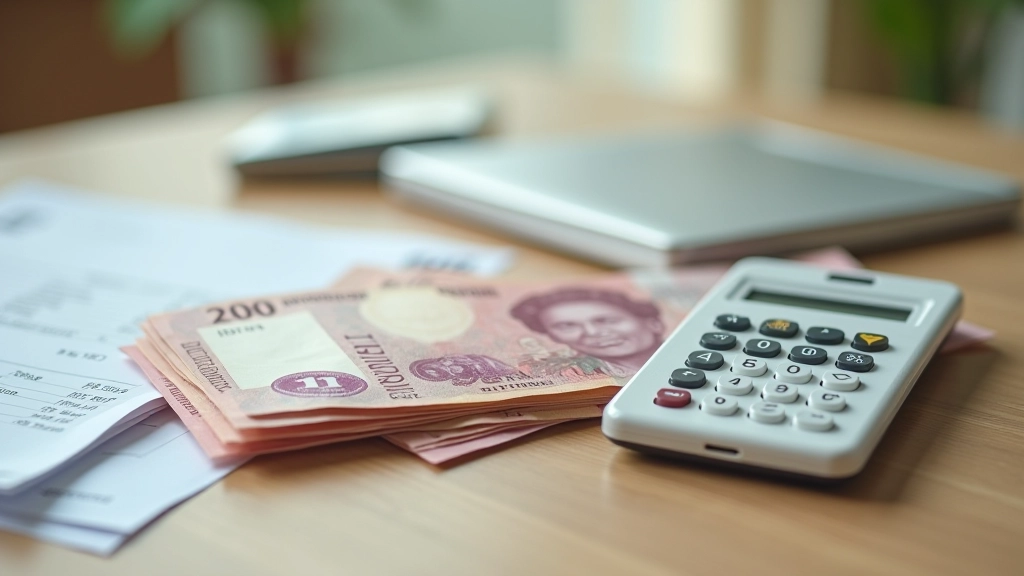
An emergency fund is your financial safety net. When your car breaks down, your job ends unexpectedly, or medical expenses pop up — you’ve got money set aside. No panic. No credit cards. No stress keeping you up at night.
The problem? Most people either don’t have one, or they’re guessing at the amount. You might think RM5,000 is enough, then face a three-month job search and realize you’re short. Or you might be sitting on RM30,000 when RM15,000 would’ve been plenty, money that could’ve worked harder elsewhere.
Here’s what we’ll cover: how to calculate your specific number, where to keep this money so it’s accessible, and why the “three to six months” rule actually makes sense for Malaysia.

Write down everything you actually spend each month. Rent or mortgage, utilities, groceries, car payments, insurance, phone bills, internet, transport — everything. Don’t estimate. Look at your bank statements for three months and average them. This is your “essential monthly burn rate.”
For most Malaysian households, this ranges from RM3,000 to RM8,000 depending on location and family size. If you’re in Kuala Lumpur with dependents, you’re probably closer to the higher end.
Are you a freelancer or do you have stable employment? Single income or dual income? Any dependents? This determines whether you need three, four, five, or six months of expenses saved.
Choose your bracket: Stable job + dual income + no dependents = 3 months. Single income or self-employed = 4-5 months. Freelancer with irregular income = 6 months. Young family with one earner = 5-6 months.
Monthly expenses months needed = your target. If you spend RM5,000 monthly and chose four months, you’re targeting RM20,000. That’s it. That’s your number.
Some people feel uncomfortable with this number. They think it’s too much or too little. Trust the math first. You can always adjust after three months if real-world data tells you different.
The three-to-six month range isn’t arbitrary. It exists because different people face different risks. A 28-year-old with a stable engineering job at a multinational company faces lower risk than a 45-year-old freelance consultant with three dependents.
Tech and finance sectors often have sharper layoffs but faster rehiring. Government or banking roles are more stable. Freelancers? You’re self-employed so you need cushion. Adjust accordingly.
One person living alone can survive on three months. Supporting aging parents or two school-age children? You’re looking at five to six months minimum. Non-negotiable.
Good health insurance through your employer reduces medical emergency impact. No insurance or minimal coverage? Build extra buffer. Healthcare costs in Malaysia can spike quickly for serious conditions.
Salaried employees get predictable income. Commission-based or seasonal work? Your income swings 30-40% month to month. You need more months saved.


You’ve calculated your target. Now where does it actually live? Not under your pillow. Not locked in stocks. It needs to be accessible within days, not weeks.
The key principle: accessible. Boring is actually good here. You’re not trying to get rich with your emergency fund — you’re trying to not panic when life throws something unexpected.
You don’t need to save RM20,000 overnight. Building an emergency fund is a marathon, not a sprint.
Get RM3,000-RM8,000 (one month of expenses) into a separate account. This covers immediate crises: car repair, sudden medical bill, urgent home repair. It’s the foundation.
Add RM200-RM500 monthly (whatever you can spare) until you hit three months. Now you’re covered for a job transition or extended medical leave. You’re getting serious.
Continue adding until you hit your calculated number. Some people do this in 12-18 months. Others take 24-36 months depending on income and expenses. Both are fine. You’re building peace of mind.
Reality check: Most people don’t hit their target in a straight line. You’ll add RM500, then something happens and you use RM1,200. That’s okay. Keep rebuilding. The fund grows in waves, not smooth lines.
No. That’s not an emergency. Emergencies are unexpected and necessary: job loss, medical costs, urgent car repairs. A vacation is planned. Save separately for that. Keep your emergency fund untouched for actual emergencies.
Probably not. If your family spends RM6,000 monthly, RM10,000 is barely two months. With four people and potential medical expenses, aim for RM24,000-RM36,000 (four to six months). It sounds like a lot because it is — that’s why you build it gradually.
No. Your emergency fund isn’t an investment. It’s insurance. When you need it, you need it now — not in three months when the market recovers. Keep it safe and accessible. Invest extra money separately in stocks or funds, not your emergency fund.
Start with what you can. RM50 monthly still builds something. RM100 is solid progress. Even RM300 quarterly helps. The point isn’t speed — it’s consistency. Small regular deposits add up faster than you think.

You’ve got the formula now. Three steps: calculate monthly expenses, pick your safety margin, multiply. That’s your target number. It’s not complicated — it just requires honest tracking and discipline.
Start this week. Open a separate savings account if you don’t have one. Transfer whatever you can — RM100, RM500, RM1,000. Don’t wait for the “perfect time.” There isn’t one. Start now with what you have.
An emergency fund won’t make you rich. It won’t make headlines. But it’ll give you something better: peace of mind. When unexpected things happen — and they will — you’ll handle it without panic. Without debt. Without sleepless nights.
That’s worth building toward.
Your emergency fund is just one piece of financial security. Explore how to create a complete safety net.
Read the Full GuideThis article is for educational purposes only and should not be considered personal financial advice. Emergency fund calculations vary based on individual circumstances, income stability, dependents, and local economic factors. The three-to-six month guideline is a general framework, not a guarantee. Consider consulting with a qualified financial advisor who understands your specific situation before making decisions about your emergency fund size or where to keep your money. Past savings patterns and future income expectations may differ from historical norms.
Savings accounts, fixed deposits, and investment funds all have tradeoffs. We break down the pros and cons of each option available to Malaysians.
Read Article
From high-yield savings accounts to money market funds — explore what’s actually available and how to compare them for your situation.
Read Article
Emergency funds are just one part of the picture. Discover the other principles that create real financial resilience for Malaysian households.
Read Article